
Stored diesel degrades. Water condenses, microbes take hold, particles build up — and the failure only shows itself the day you actually need the engine to start. We test it, report it, and fix it.
Independent, impartial results — we don't sell the fuel we test.
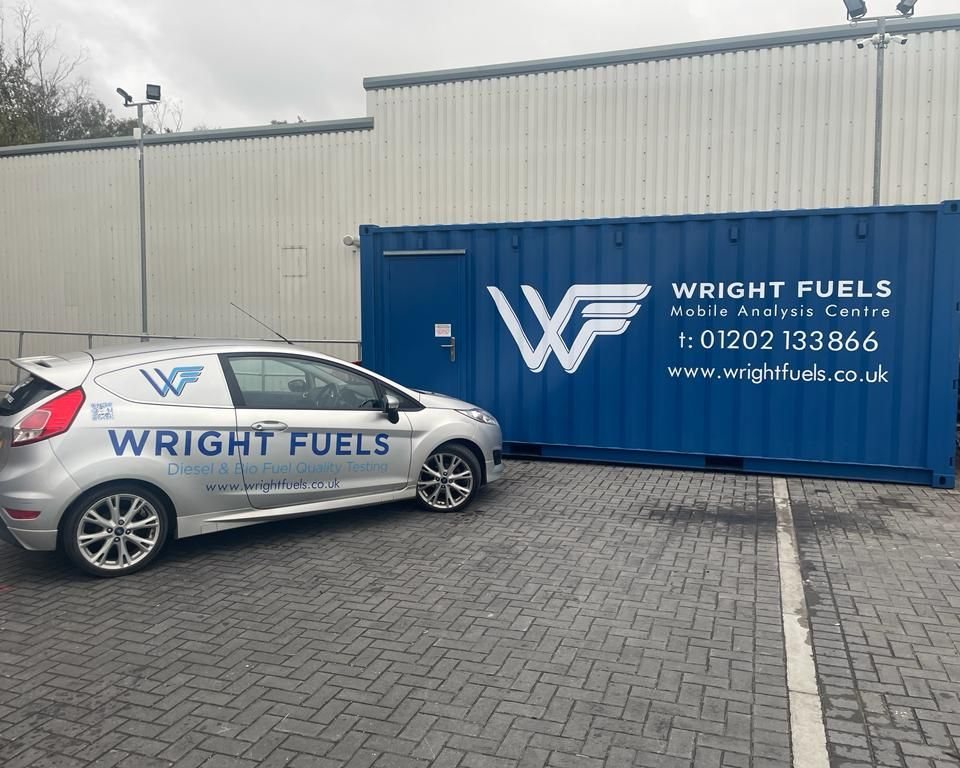
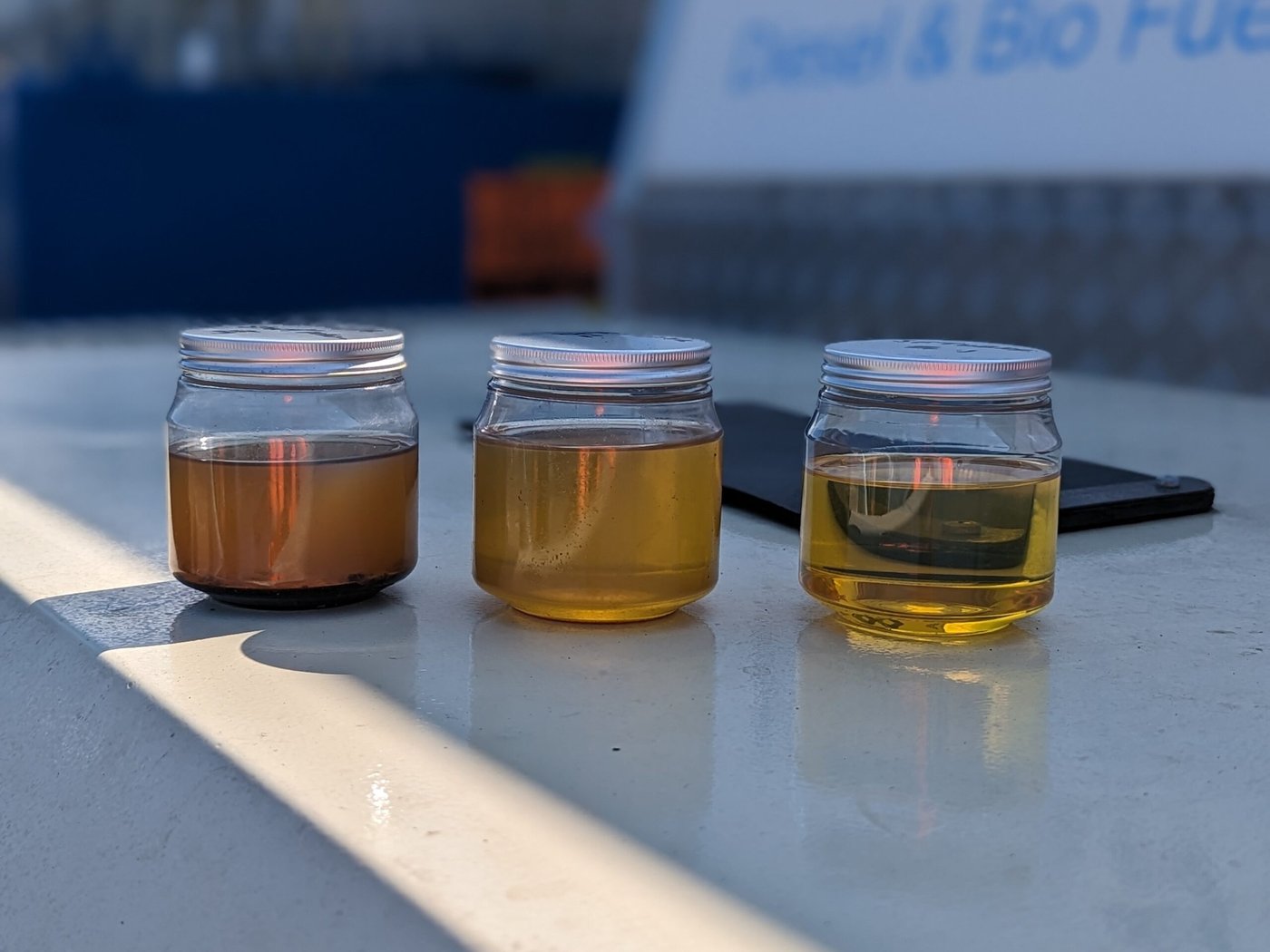
Contamination is invisible until it isn't. By the time a filter blocks or an engine won't fire, the damage — and the downtime — has already happened.
Four services that cover the full lifecycle of stored fuel — from a single diagnostic sample through to an ongoing monitoring programme.
Purpose-built laboratory testing against recognised ASTM and ISO methods. You get an accurate picture of what's in your tank plus a clear, plain-English report with recommended actions.
Explore analysis 02 / TREATMENTMobile polishing rigs attend site and filter out water, sediment and microbial contamination. Fuel goes back bright and clear — then we re-sample to prove the problem's gone.
Explore polishing 03 / PROTECTIONTargeted additive dosing to stabilise stored fuel, control microbial growth and protect against the degradation that comes with long-term storage.
Explore additives 04 / CALIBRATIONAccurate calibration of contents gauges so the level you're reading is the level you actually have. Essential for compliance and for knowing your real reserve.
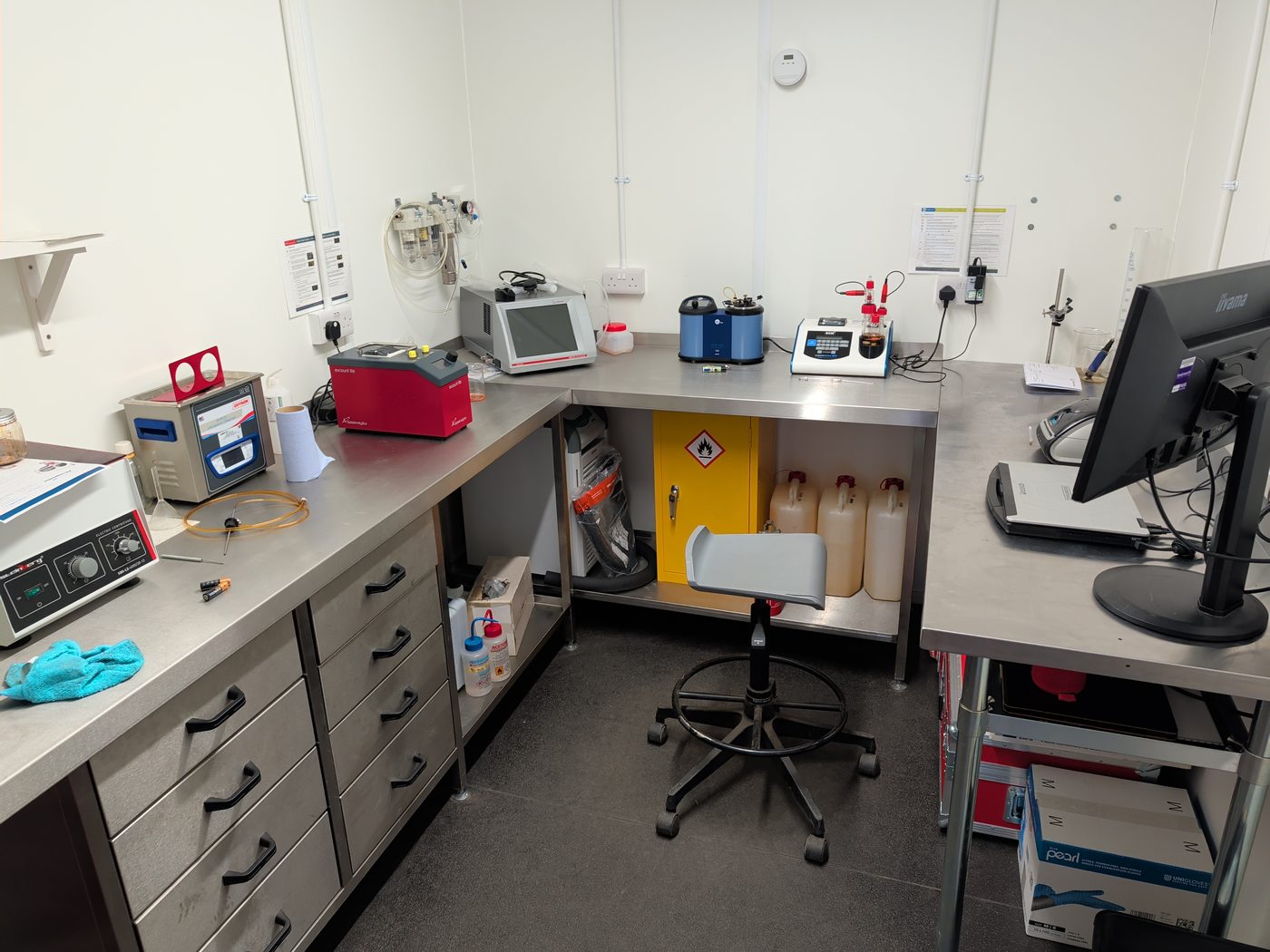
Explore calibrationNo guesswork and no vague pass/fail. Each test we run is measured against an internationally agreed standard, so your report stands up to scrutiny — including full cold-properties and ignition-quality analysis on our Anton Paar and Koehler instruments.
Cleanliness rated against ISO 4406. High particulate loads block filters and drive engine wear.
Coulometric Karl Fischer titration confirms water levels sit within safe operating limits for your equipment.
Identifies cross-contamination with other substances and flags added storage risk.
Determines what percentage of your fuel is fatty acid methyl esters — critical for blend compliance.
A core quality parameter used to verify spec and to derive further fuel characteristics. Available on the bench or on site.
How readily the fuel flows. Viscosity outside spec affects injector performance, spray pattern and cold starting.
The temperature at which wax begins to crystallise out of the fuel — the first warning of cold-weather filter blocking.
Ignition quality. Low cetane means hard starting, rough running, noisier combustion and higher emissions.
Detects the bacteria and fungi — diesel bug — that thrive in the water layer at the tank bottom.
† Determined by correlation. Cloud point is measured optically on our Anton Paar SVM 3001 Cold Properties analyser and reported as an ASTM D2500 correlation. Cetane number is measured on our Koehler enhanced portable analyser by near-infrared spectroscopy, calibrated to give accuracy and repeatability equivalent to the ASTM D613 CFR engine method. Viscosity and density are also determined on the SVM 3001, in full compliance with ASTM D7042 and D4052 respectively.
We attend site and draw samples from the right points in your system — or you send them to the lab. For breakdown investigations we sample across the supply chain to isolate where contamination entered.
Testing runs in our purpose-built laboratory. You receive a detailed report setting out the condition of your fuel and exactly what we'd recommend doing about it.
If treatment is needed, our mobile polishing equipment attends site. We re-test afterwards to confirm the fix, then set up a monitoring programme so it doesn't recur.
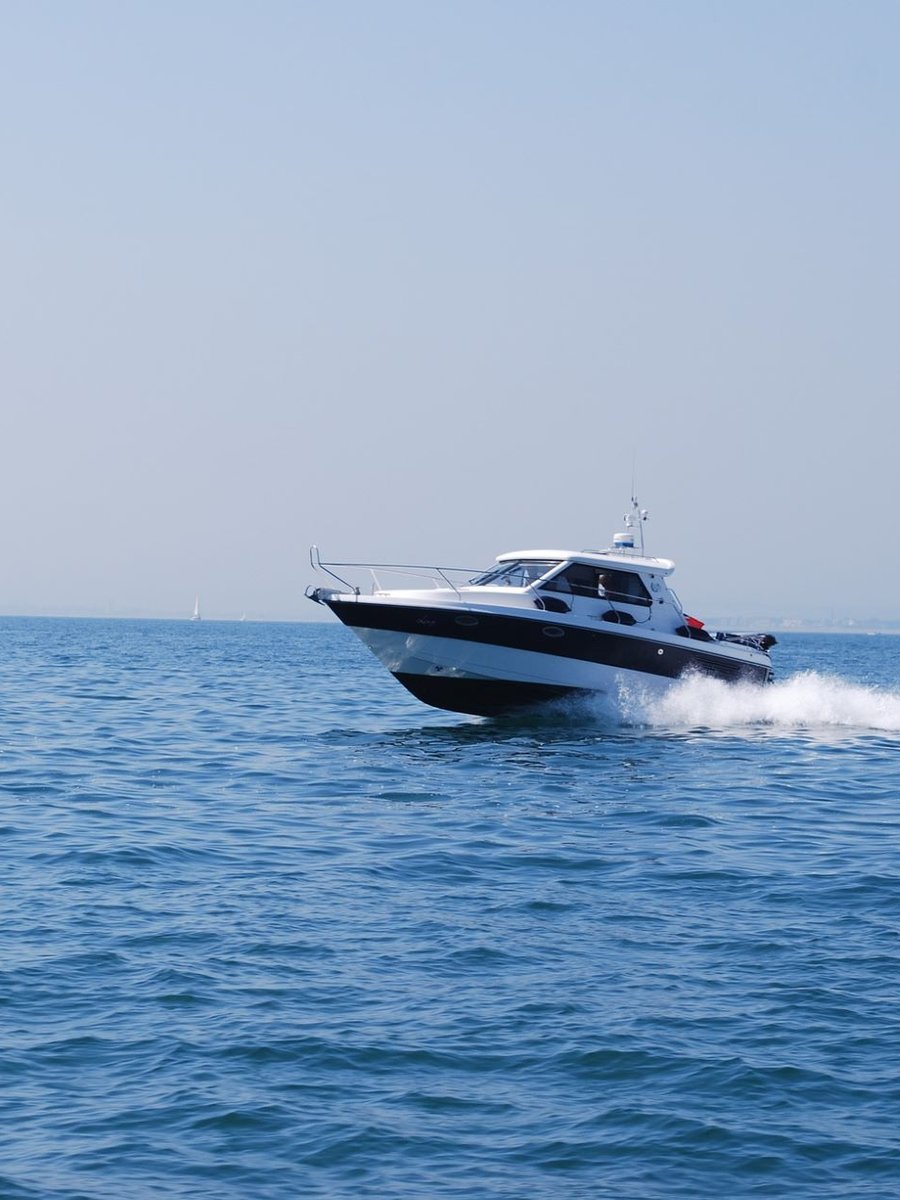
We work with operators whose engines have to start first time, every time — because something important depends on it.




"We're a small team of specialists doing work that matters to our customers' operations. That shapes how we look after them."
Wright Fuels is a family-run business based in Poole, Dorset, with over 30 years of combined experience in the fuel industry. We work with businesses and individuals to maximise efficiency and profitability while avoiding costly breakdowns and power loss.
Tell us what you're storing and where, and we'll recommend the right test package. No obligation, and no jargon in the reply.
enquiries@wrightfuels.co.uk · Poole, Dorset · Nationwide service