
Contamination builds up in stored fuel if it isn't tested and treated. Our mobile equipment comes to you, filters out the water, sediment and microbial growth, and returns the fuel bright and clear.
Fuel polishing is the technical term for the removal of water, sediment and microbial contamination from fuels such as diesel and biodiesel.
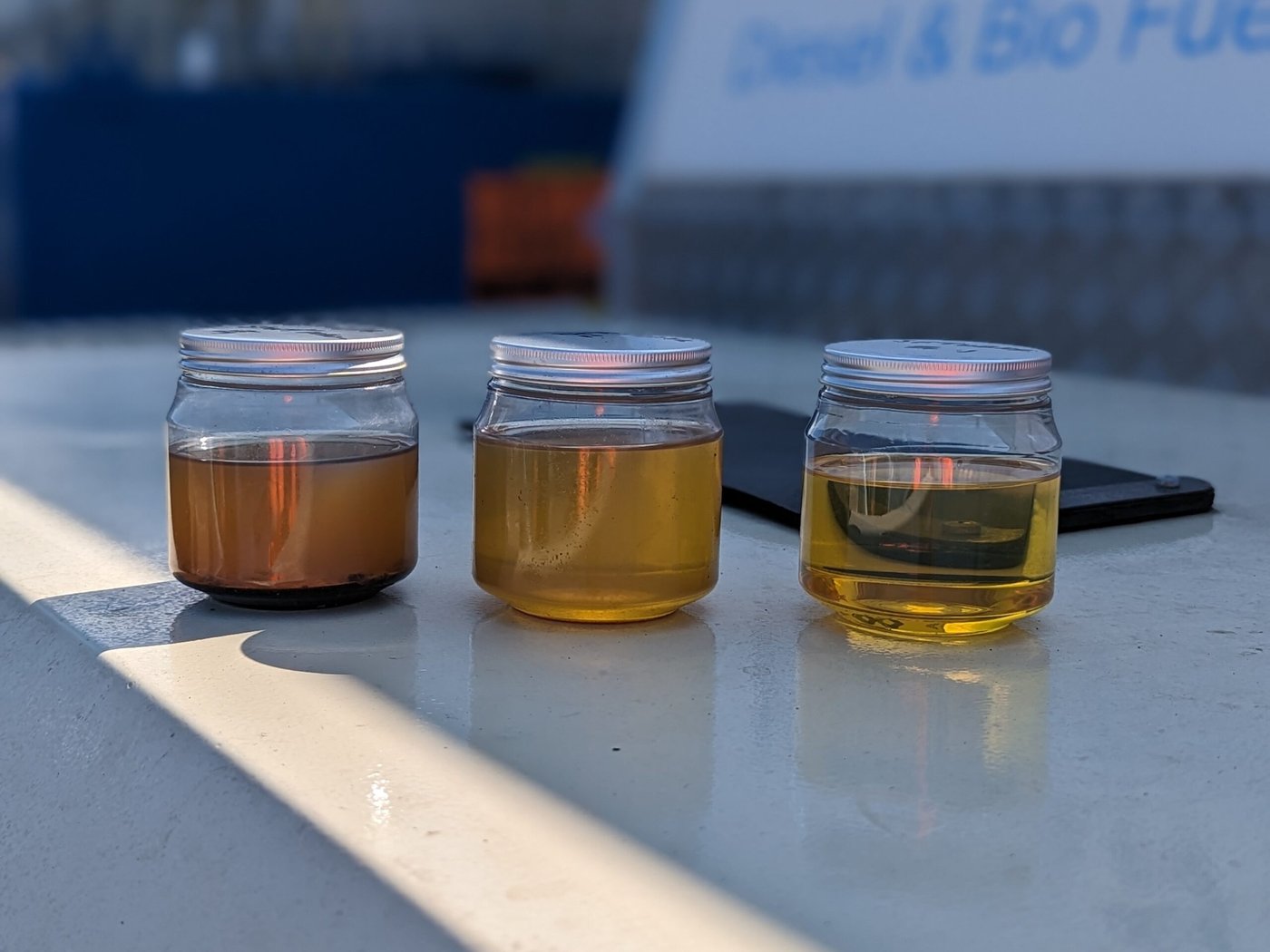
The name comes from the appearance of the fuel once treatment is complete. Beforehand the fuel typically looks dark, and can be cloudy depending on the type of contamination present. Afterwards it appears bright and clear with a shine to it — much like polishing a dusty table.
It is a visible, immediate demonstration that the problem has been dealt with. But we don't rely on appearance alone: we re-sample and re-test afterwards to prove it.
Usually because a test told you so — either ours, or someone else's.
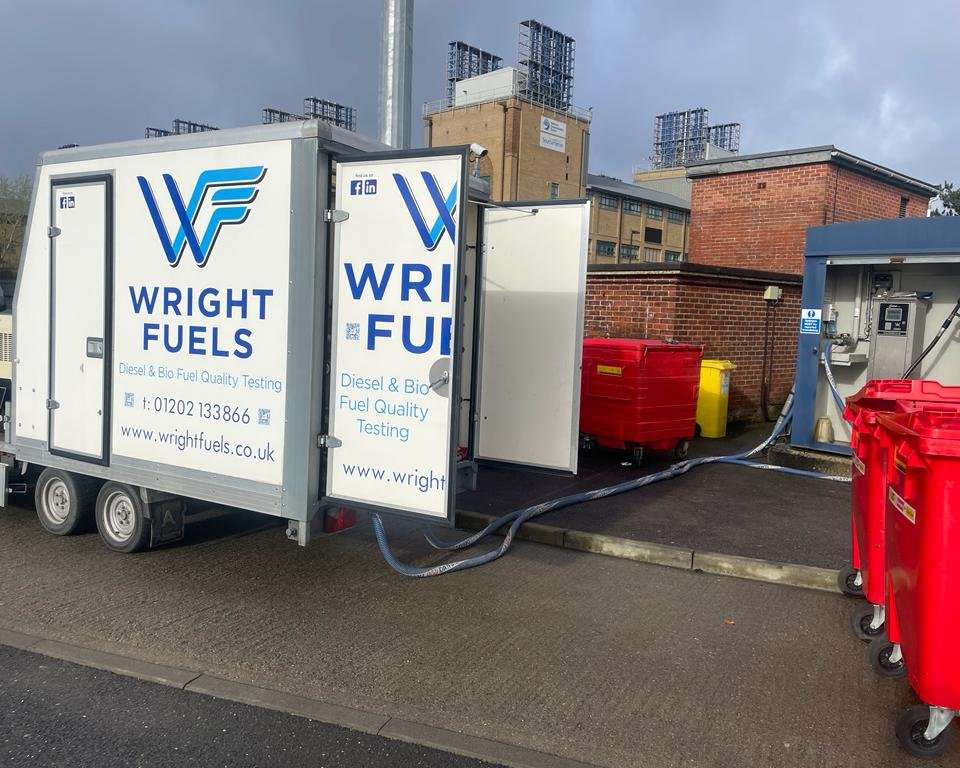
If our analysis identifies contamination, we can rectify it. We attend site with mobile polishing equipment and filter the fuel so it returns to its optimum level of performance. A fresh set of samples is then taken and re-tested to confirm the problem has genuinely been dealt with.
If you have received a recommendation elsewhere that your fuel requires treatment, we offer polishing as a standalone service. You get the same outcome — peace of mind that the risk of fuel-related mechanical breakdown has been kept to a minimum.
We confirm the tank layout, access and volume, and take a pre-treatment sample so there is a documented baseline to measure the result against.
Mobile filtration circulates the stored fuel, stripping out water, sediment and microbial matter. Larger volumes take longer, but the plant comes to you and your tank stays in place.
Fresh samples go back to the laboratory. You receive a post-treatment report showing the fuel against the same standards as before, so the improvement is documented rather than assumed.
Contamination almost always comes back if the underlying cause is untouched — a failed seal, a poorly sited vent, a tank that never turns its stock over. Once fuel is clean, scheduled testing catches the drift early, while it is still a filter change rather than a failed start.
Send us the numbers you have — or none at all — and we'll tell you whether polishing is the right answer before anyone books a visit.
enquiries@wrightfuels.co.uk · Poole, Dorset · Nationwide service