
Nine standardised tests run in our purpose-built laboratory, reported in plain English with the actions we'd recommend. From a single diagnostic sample to a year-round monitoring programme.
Regular quality analysis is critical for contamination control and fault detection. What we find in a sample points straight back at the tank it came from — its seals, its vents, its water bottom, and how long the stock has been turning over.
By investing in a fuel quality monitoring programme, you have the confidence that your fuel will perform when it is called upon, and you cut the risk of sudden failures, unplanned outages and disruption to your operations.
Our laboratory is equipped to give an accurate description of the quality of your fuel and to highlight any contamination, so you can be sure your equipment performs at its optimum level. Where it matters, we draw from more than one depth — because a clean draw near the top says very little about what is sitting at the bottom.
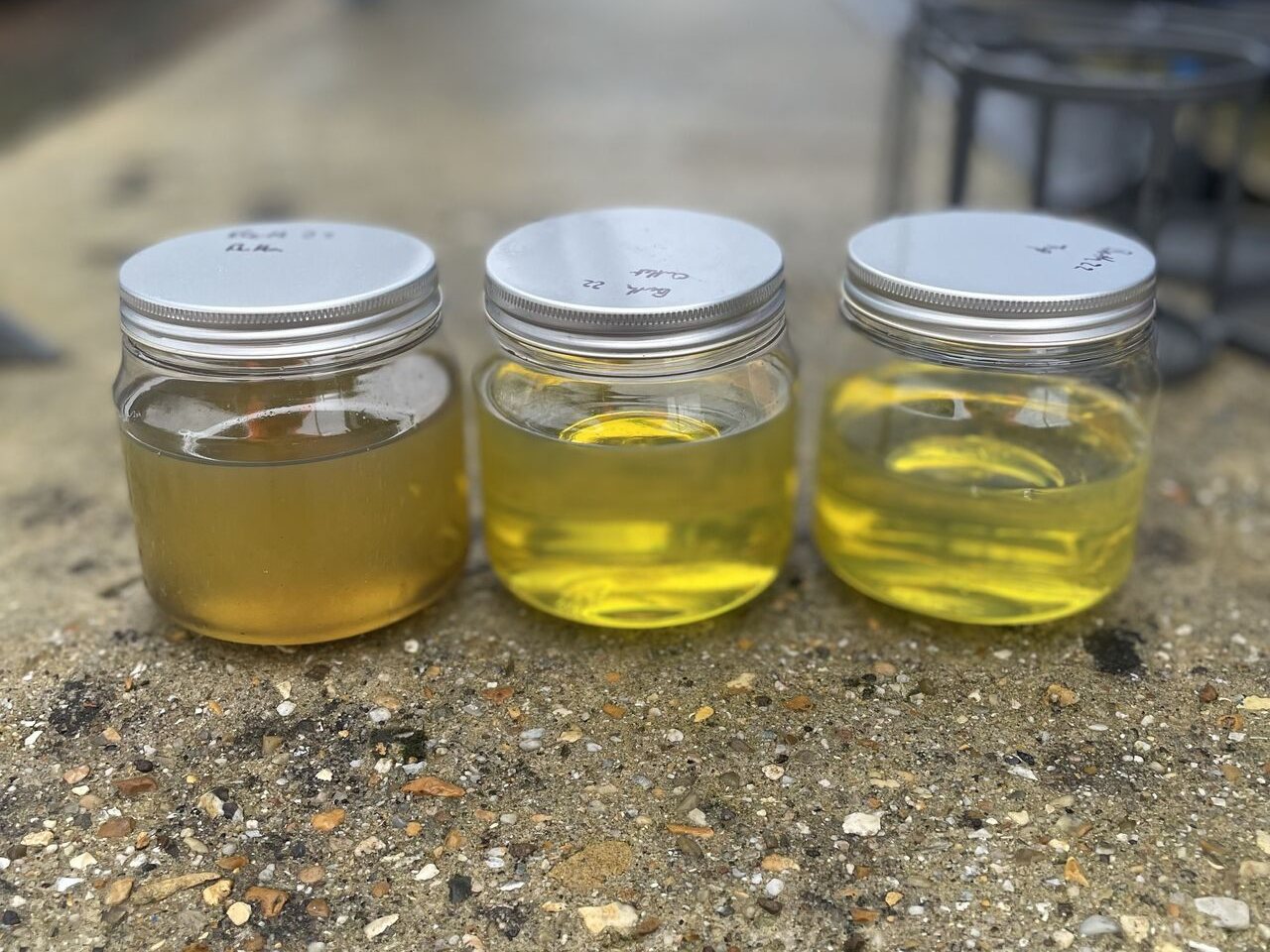
Top, middle and bottom draws from the same tank. The difference is visible before an instrument is involved.
Every result is traceable to a recognised method, so your report stands up to scrutiny from an insurer, an auditor or an engine manufacturer.
Cleanliness rated against ISO 4406. High particulate loads block filters and drive engine wear.
Coulometric Karl Fischer titration confirms water levels sit within safe operating limits for your equipment.
Identifies cross-contamination with other substances and flags added storage risk.
Determines what percentage of your fuel is fatty acid methyl esters — critical for blend compliance.
A core quality parameter used to verify spec and to derive further fuel characteristics. Available on the bench or on site.
How readily the fuel flows. Viscosity outside spec affects injector performance, spray pattern and cold starting.
The temperature at which wax begins to crystallise out of the fuel — the first warning of cold-weather filter blocking.
Ignition quality. Low cetane means hard starting, rough running, noisier combustion and higher emissions.
Detects the bacteria and fungi — diesel bug — that thrive in the water layer at the tank bottom.
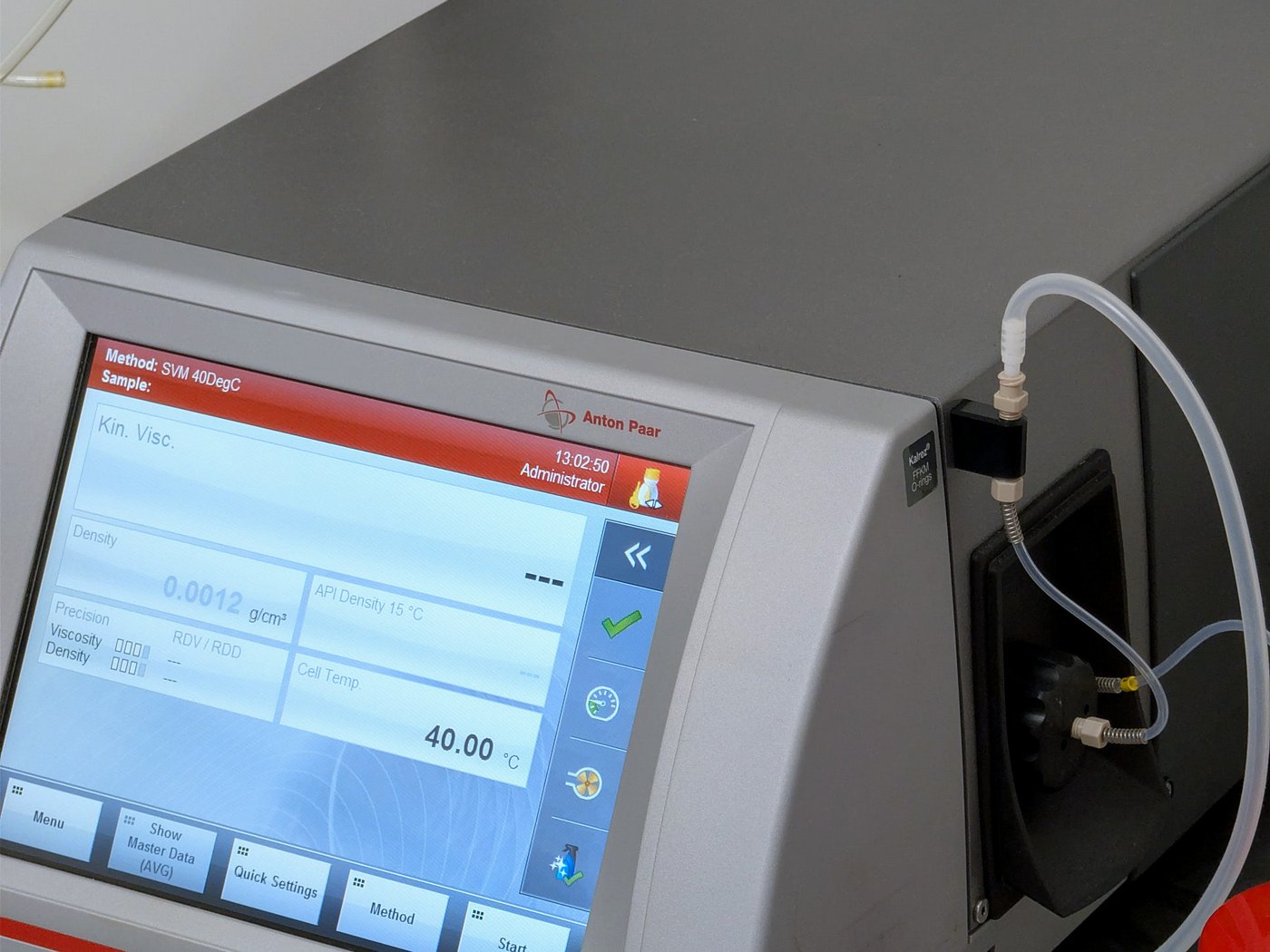
† Determined by correlation. Cloud point is measured optically on our Anton Paar SVM 3001 Cold Properties analyser and reported as an ASTM D2500 correlation. Cetane number is measured on our Koehler enhanced portable analyser by near-infrared spectroscopy, calibrated to give accuracy and repeatability equivalent to the ASTM D613 CFR engine method. Viscosity and density are also determined on the SVM 3001, in full compliance with ASTM D7042 and D4052 respectively.
Kinematic viscosity, density and cloud point from a single automated measurement cycle, with cryogenic control down to −60 °C. Compliant with ASTM D7042 and D4052.
Near-infrared determination of cetane number, calibrated for accuracy and repeatability equivalent to the ASTM D613 CFR engine method — without the CFR test engine that method normally demands.
Water content to ASTM D6304. The single most revealing test on a stored-fuel sample, and the precursor to almost every microbial problem we find.
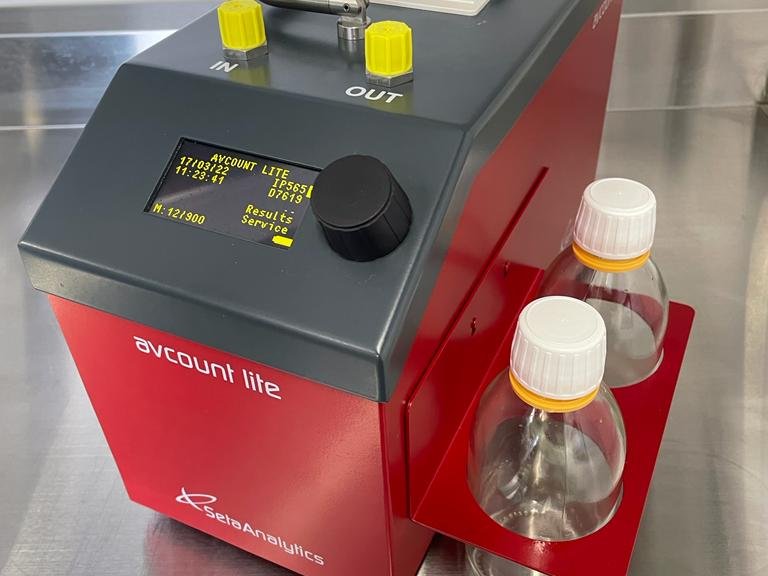
Automatic particle counter reporting cumulative counts, particles/ml and ISO 4406 cleanliness codes to ASTM D7619 and IP 565.
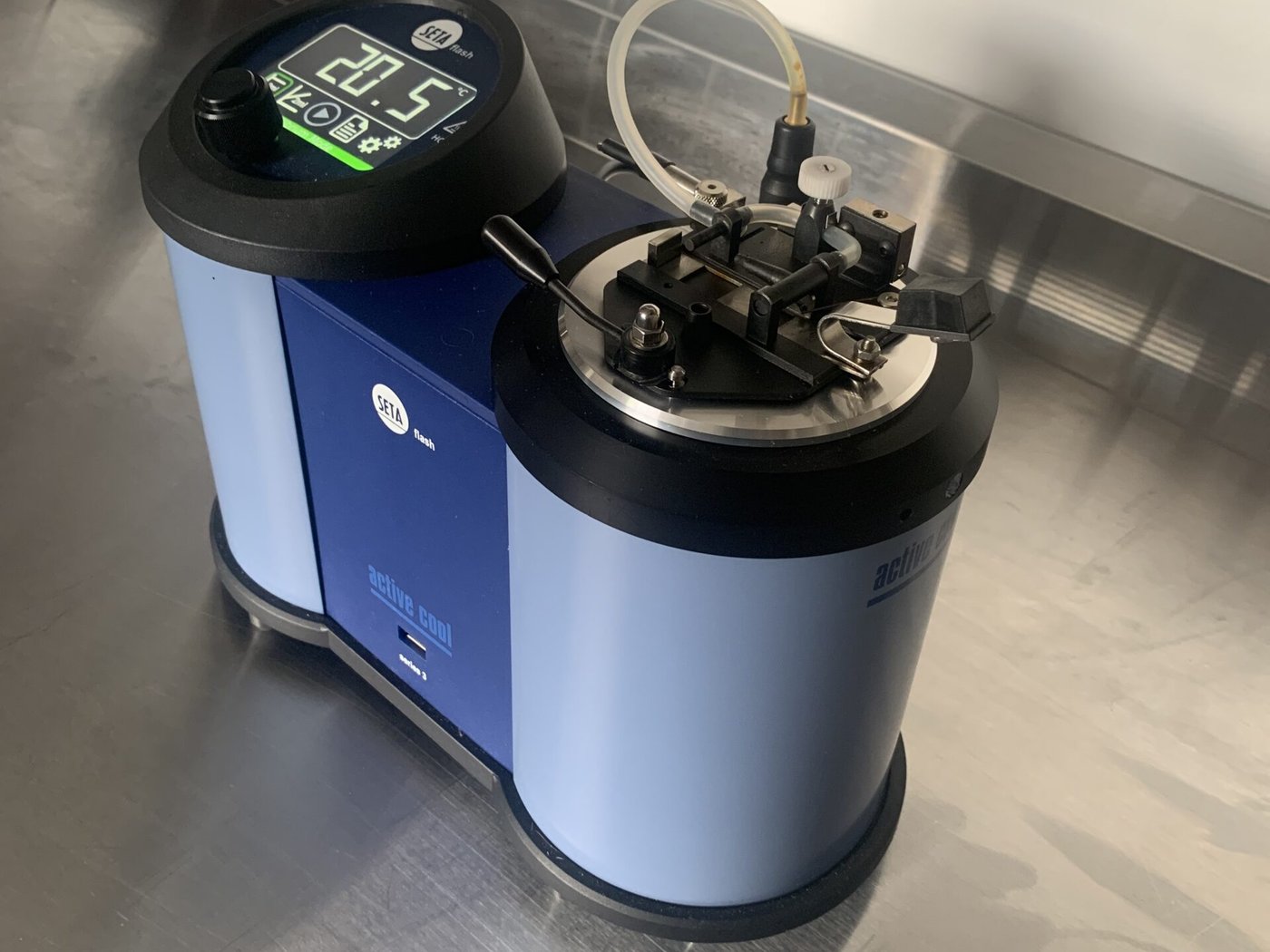
Flash / no-flash testing to ASTM D3828 across 10–135 °C. Peltier heating and cooling with automatic barometric correction, from a 2 ml sample.
Handheld mid-infrared determination of F.A.M.E content to ASTM D8274, from 0.1% to 40%. Ability to run at the tank as well as back at the bench.
High levels of particle contamination cause filters to block and increase engine wear, leading to mechanical breakdowns and costly downtime.
Cleanliness describes the relative quantity of solid contaminant particles in a system large enough to cause a seizure or fracture that cannot be reversed. ISO 4406 is the most common standard used to rate it, and it is the one we report against.
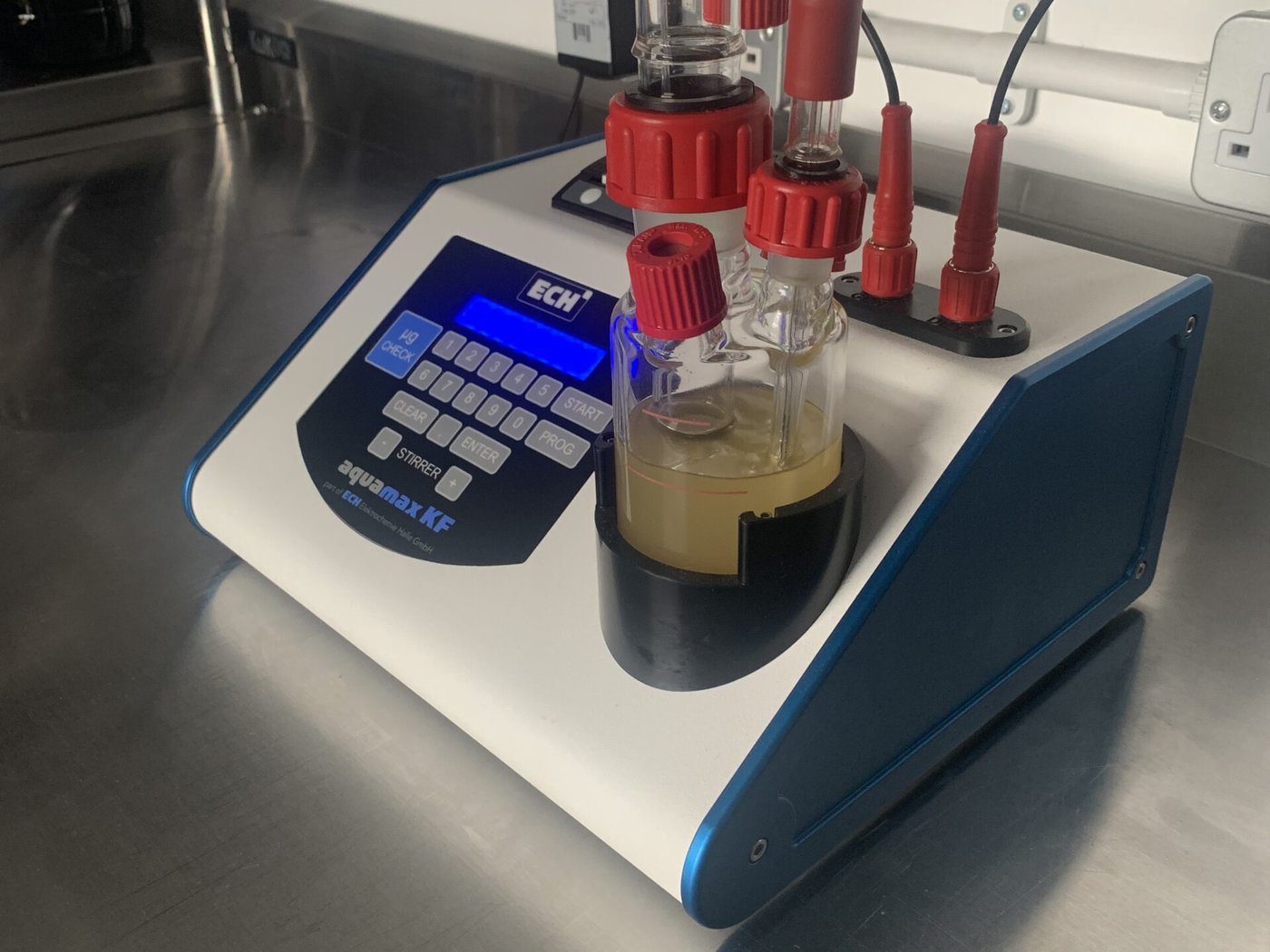
The effects of water contamination can be disastrous and can ultimately lead to catastrophic failure of a machine.
When water meets iron or steel, rust forms — and rust particles are abrasive, exposing fresh metal that then rusts in turn. Water droplets can also strike a metal surface as a high-pressure, needle-like jet and cause surface fatigue.
Flash point testing determines whether a sampled mixture of vapour and air is flammable, and the temperature at which that flammability occurs.
It is particularly useful for establishing whether your fuel has been contaminated with another substance — something that can quietly reduce performance and increase the risks associated with storage.
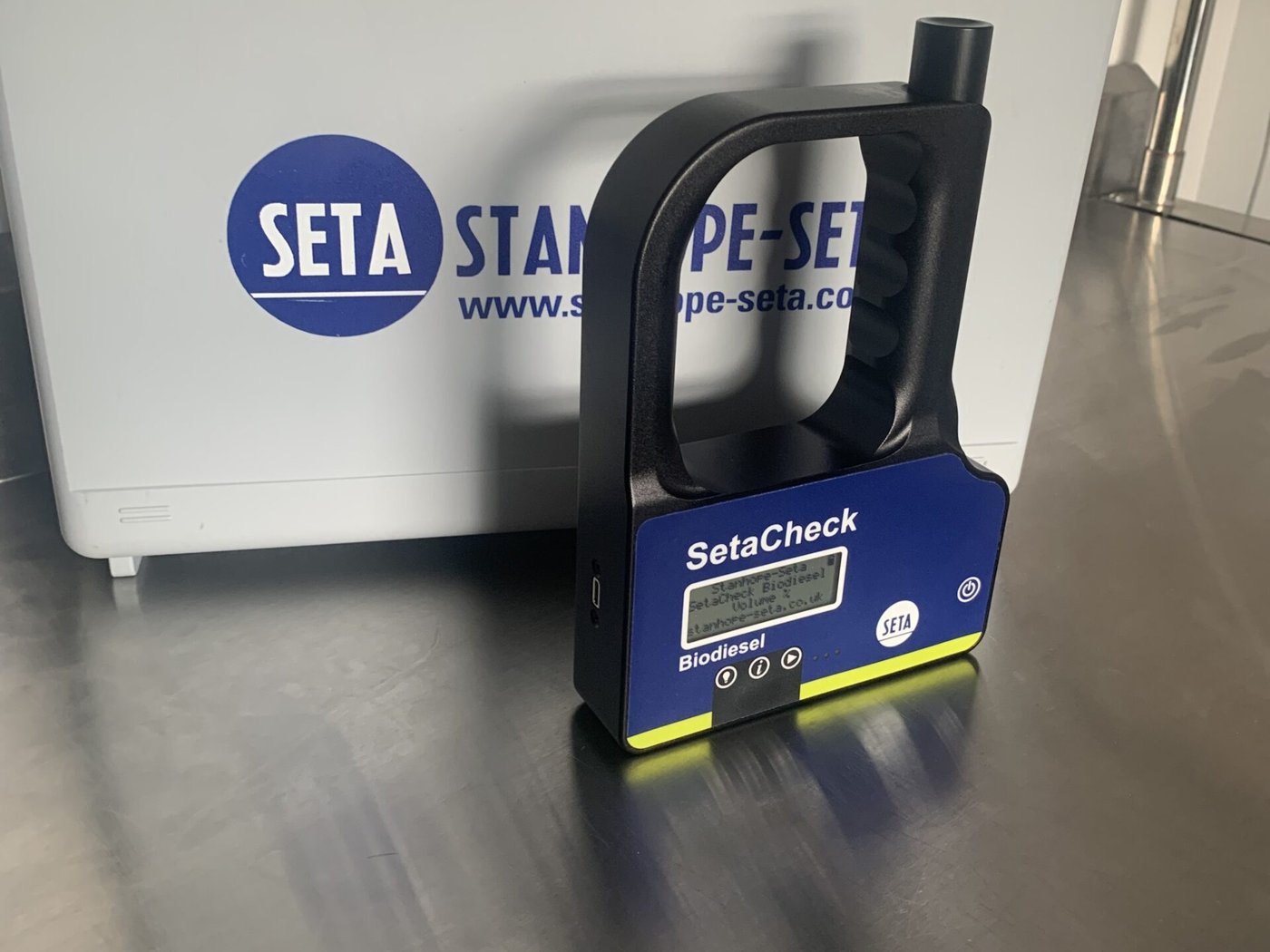
Fatty acid methyl esters are the molecules that make up biodiesel, obtained from vegetable oils by transesterification with methanol. F.A.M.E is used in place of free fatty acids partly to nullify the corrosion those acids would otherwise cause to engines, production facilities and storage tanks.
Knowing the actual blend percentage matters because biodiesel behaves differently in storage from mineral diesel — it holds more water, supports microbial growth more readily, and has a shorter usable life. If you do not know what proportion you are storing, you cannot judge how long it will last.
Three of the nine parameters come off a single instrument in a single automated run. Our Anton Paar SVM 3001 Cold Properties analyser measures kinematic viscosity (ASTM D7042), density at 15 °C (ASTM D4052) and cloud point (ASTM D2500 correlation) together, with cryogenic control down to −60 °C.
Viscosity governs how readily fuel moves through your system and how well it atomises at the injector. Too high and the spray pattern coarsens, combustion goes incomplete and deposits build. Too low and there is insufficient lubrication for the injection pump.
Density describes the product and lets other characteristics be calculated from it. Because it shifts with temperature it is reported at a 15 °C reference — and a figure outside the expected band is often the first clue a delivery is not what the paperwork claims.
Cloud point is the temperature at which wax first crystallises out, turning the fuel hazy. Below it, wax blocks filters — and plant that ran without complaint all summer refuses to start on the first hard frost. It matters most for outdoor and unheated tanks.
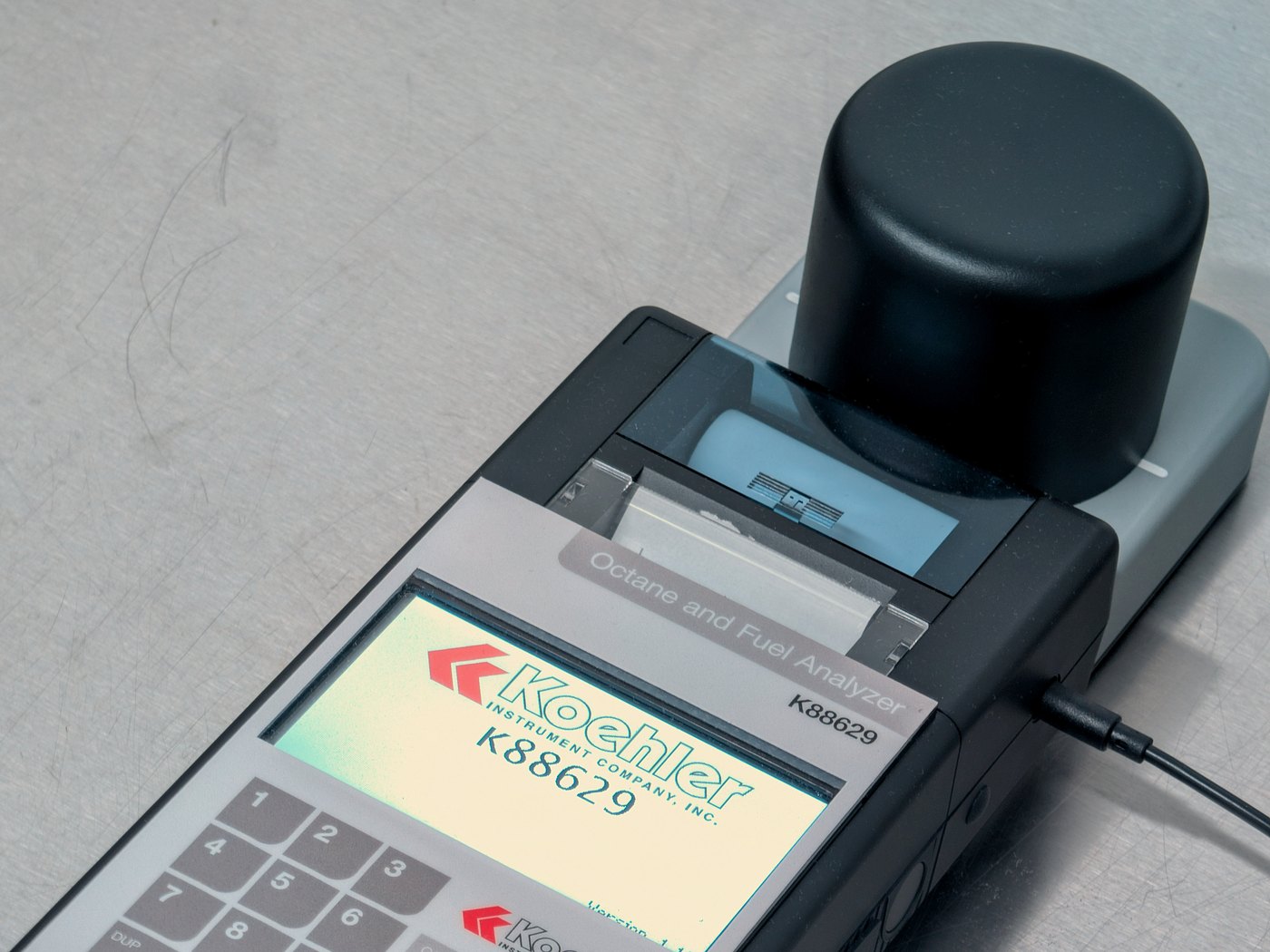
Cetane number describes how readily fuel ignites under compression — effectively the delay between injection and combustion. Higher cetane means a shorter delay and smoother, more complete burning.
Low cetane shows up as hard starting, rough or noisy running, white smoke on a cold start and higher emissions. For road diesel in the UK, EN 590 sets a minimum cetane number of 51, so a result below that is a meaningful finding rather than a curiosity.
Fuel will usually stay usable in storage for up to a year, after which it may begin to develop sediments, bacteria and fungi.
Water forming through condensation — tanks warming by day and cooling by night — creates the perfect petri dish. The best known of the organisms that result is diesel bug, which deteriorates the fuel and creates a sludge fully capable of damaging your engine.
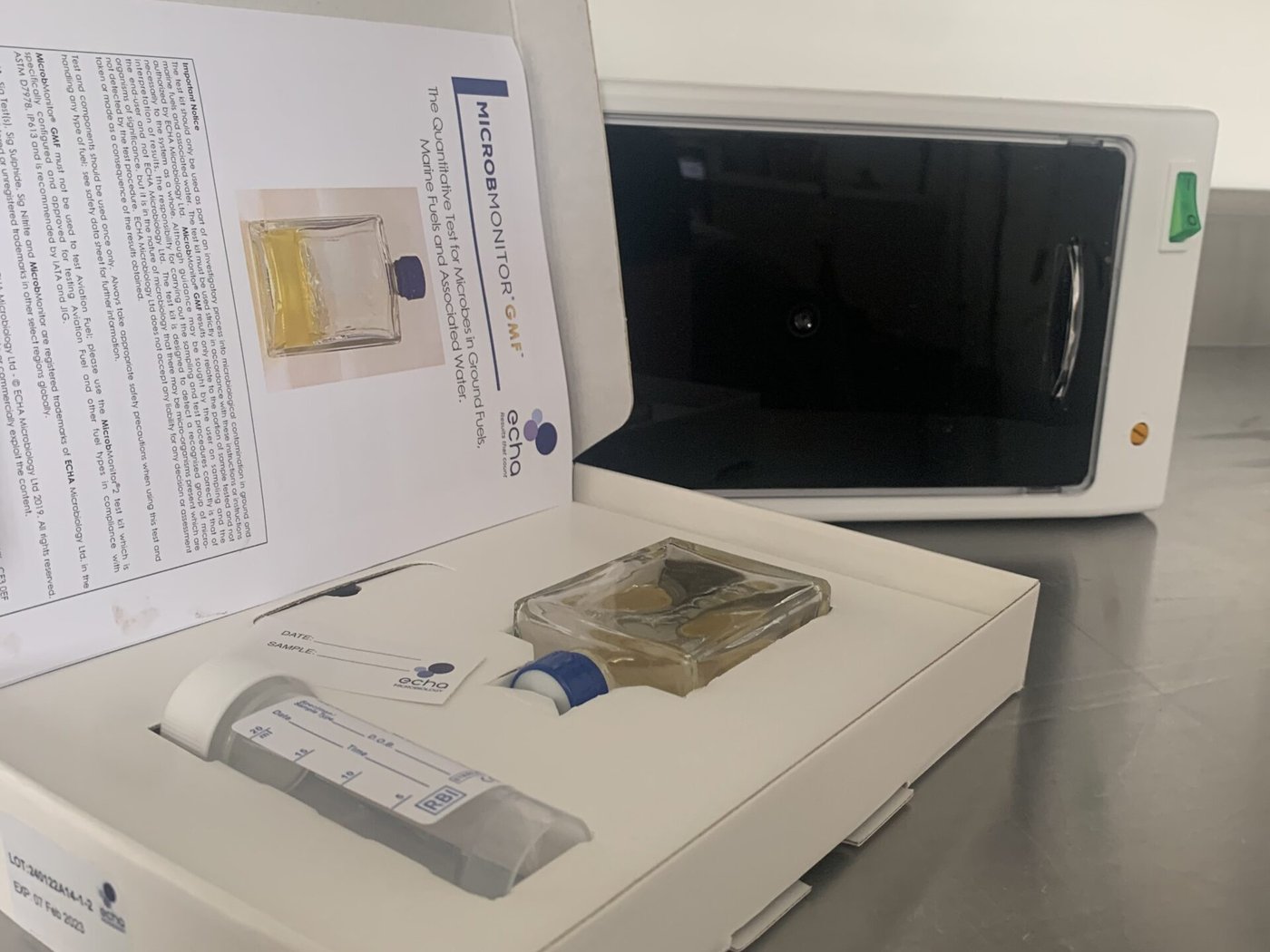
Scheduled testing protects the quality of fuel supplied to your business and your end users. Regular sampling heads off increased engine wear, schedule disruption, downtime and costly repairs — and our fast turnaround means you can act on a problem while it is still small.
Contamination can enter at any point along the supply chain. By sampling at different points we narrow down where the issue lies, identify the type of contamination as well as the source, and help you reduce the risk of it happening again.
Tell us what you store, how much of it, and how long it sits. We'll recommend a package that fits — and say so if you need less than you think.
enquiries@wrightfuels.co.uk · Poole, Dorset · Nationwide service